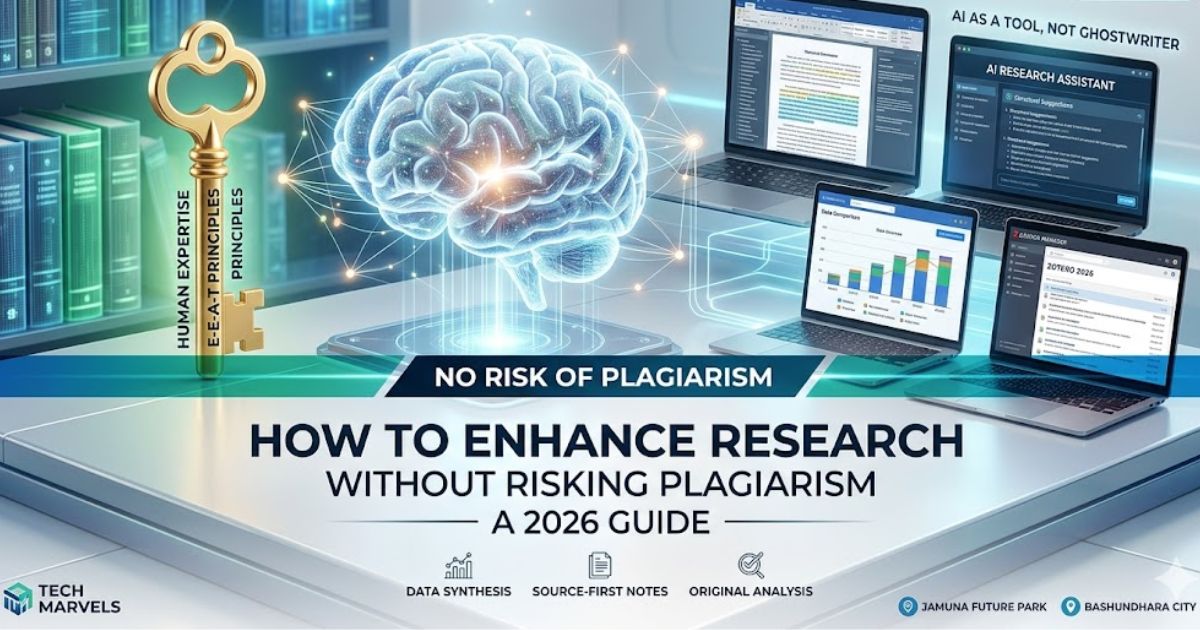
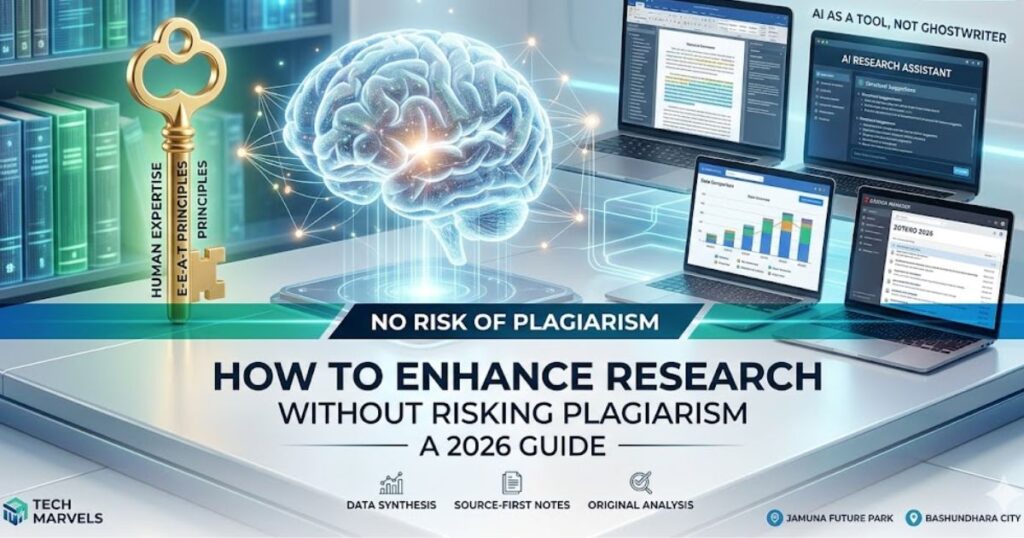
In an era where information is limitless and AI tools are ubiquitous, the line between “inspired research” and “accidental plagiarism” has become increasingly thin. For students, researchers, and professional content creators in Bangladesh, mastering the art of high-quality research is no longer just about finding facts; it is about ethical synthesis and maintaining a unique “human-first” perspective.
Enhancing your research requires a strategic approach that adds value to existing data rather than merely duplicating it. Here are seven essential strategies to elevate your work while maintaining 100% academic and professional integrity.
Top 7 Points to Enhance Research Without Risking Plagiarism
1. Master the Art of Ethical Information Synthesis
Great research isn’t a collection of quotes; it’s a conversation. To avoid plagiarism, you must move beyond “copy-paste” and focus on synthesis.
The “Look Away” Method: After reading a complex paragraph, close the source and explain the concept out loud. Write down your spoken explanation. This ensures the phrasing is naturally yours while retaining the original intent.
Cross-Referencing: Never rely on a single source. Comparing findings from three or more reputable sources allows you to form a unique, multidimensional perspective that no single source can provide.
2. Use AI as a Research “Architect,” Not a Ghostwriter
In 2026, search engines and AI detectors prioritise content with high Experience (the ‘E’ in E-E-A-T).
Prompt for Structure: Use Large Language Models (LLMs) to suggest outlines or identify “content gaps” in your research.
The Verification Rule: AI can “hallucinate” facts or citations. Always verify AI-generated data against primary sources like Google Scholar or official tech documentation.
3. Prevent “Patchwriting” Through Deep Paraphrasing
Patchwriting, the act of swapping a few synonyms while keeping the original sentence structure, is a common form of accidental plagiarism.
Structural Overhaul: Don’t just change words; change the delivery. Convert a list into a narrative or a dense paragraph into a structured table.
Add Original Analysis: Every time you present a fact, follow it with a sentence explaining why it matters to your specific audience. This “Value Add” is what Google rewards in its ranking guidelines.
4. Implement a “Source-First” Note-Taking System
Plagiarism often occurs during the final edit when citations become detached from their ideas.
The Tagging Method: In your rough drafts, tag every single note with the source URL or author name immediately.
Quote Banks: Keep a separate document for direct quotes. If a sentence isn’t in your “Quote Bank,” it must be entirely in your own words.
5. Master the Nuances of Citation Styles
Citing isn’t just about avoiding a penalty; it’s about providing a roadmap for your readers.
Direct vs. Indirect: Use direct quotes for powerful, unique phrasing. Use indirect citations (paraphrasing) for data and general concepts.
AI Attribution: If a specific insight or unique structure was suggested by an AI tool, it is becoming best practice in 2026 to acknowledge the tool used (e.g., “Synthesised with assistance from Gemini 3 Flash”).
6. Curate Primary Data Through Personal Expertise
To truly stand out in AI-driven search results, you need information that doesn’t exist elsewhere.
First-Hand Observation: Include your own case studies, interviews, or testing results.
Local Context: For researchers in Bangladesh, applying global tech trends to the local market (e.g., how a specific laptop performs in Dhaka’s humidity) provides a unique “Experience” that AI cannot replicate.
7. Run a “Source Drift” Audit Before Publishing
Before the final hit of the “Publish” button, perform a “Source Drift” check.
Final Similarity Pass: Use professional-grade plagiarism checkers to ensure no accidental overlaps occurred during the heavy editing phase.
The “Says Who?” Test: Read your article one last time. Every time you make a factual claim, ask, “Says who?” If the answer isn’t “Me, based on my own experiment,” you must add a citation.
Research Enhancement Comparison Table
Research Level
Method
Integrity Risk
Quality Outcome
Basic
Copy-pasting with minor edits
High (Patchwriting)
Low Authority / Duplicate Content
Intermediate
Paraphrasing with citations
Low
Standard Academic/Blog Content
Advanced
Synthesis of 3+ sources + Personal Insight
Zero
High E-E-A-T / Featured Snippet Potential
Why Research Integrity Matters at Tech Marvels
At Tech Marvels, we believe that the best technology should empower human intellect, not replace it. Whether you are using high-performance Lenovo Legion laptops for data processing, HP Victus laptops for creative writing or any other laptops, the goal is to produce work that is both innovative and honest.
Visit our stores for research-ready hardware and expert advice:
1. Is paraphrasing without a citation considered plagiarism?
Yes. Even if the words are yours, the idea belongs to the original author. Always provide an in-text citation or a hyperlink to the source.
2. What is the “Safe” similarity percentage for an article?
Most professionals aim for under 5-10%. However, even 1% is too high if it involves a direct quote without quotation marks.
3. Does Google penalise AI-generated research?
Google penalises “unhelpful” content. If your research is just AI-generated fluff without human oversight or new insights, it will likely struggle to rank.
4. How do I cite a source with no clear author?
Use the organisation name (e.g., “Tech Marvels”) or the webpage title as the primary identifier.
About Nafis Shahriar
Nafis is a cybersecurity and networking enthusiast with over 10 years of hands-on experience in the IT industry. A CCNA-certified professional, he creates technical scripts and articles for popular YouTubers and regularly shares practical insights on Windows troubleshooting, laptops, smartphones, hardware, networking, and emerging technologies.
A simple 15-minute checklist for buying a new laptop in Bangladesh: box seal, serial number, specs, screen, battery health, Windows activation and the invoice.
NPU, TOPS and Copilot+ explained simply. We compare Intel Core Ultra, AMD Ryzen AI and Snapdragon X laptops and tell you when an AI laptop is worth buying in Bangladesh.
RTX 5050, 5060 or 5070? A simple 2026 guide to RTX 50 series laptop GPUs in Bangladesh, with specs, performance gaps, prices and the best-value models.